
All About Asbestos

Fast & Efficient

24 Hour Surveys

48 Hour Reports

Expert Surveyors
Home » All About Asbestos
‘Asbestos’ is one of those words that provokes a lot of fear in people. By now, we are well-acquainted with the potential health consequences of asbestos, which was a commonly-used industrial and building material throughout the 20th century. But asbestos is a large topic and its dangers, while well-documented, are often misunderstood, causing unnecessary panic.
Alpha Surveys is an expert provider of asbestos testing, management surveys and removal services. We are here to explain everything you need to know about asbestos.
What is asbestos?
Asbestos is an umbrella term describing a group of naturally-occurring minerals found in deposits all over the world—particularly in the United States, China, Russia, and South America. Once extracted, asbestos can be processed into a cloth-like material for industrial usage.
Naturally composed of millions of tiny fibres that bind together to create a lightweight and supple material, asbestos is highly resistant to heat, electricity and corrosion. As a result, it became one of the world’s most widely used industrial insulation products throughout the 20th century.
However, the medical community came to realise that inhalation of asbestos fibres was causing irreparable and potentially fatal damage to the lungs of people who were handling it. In 1999, the UK became one of many countries that has outlawed the import and use of asbestos.
Asbestos health effects
Exposure to asbestos is scientifically proven to cause a number of serious and life-threatening lung disorders in both humans and animals.
The most common misunderstanding around asbestos is that its presence alone is enough to render it a risk. Asbestos is only dangerous if it is disturbed and its fibres released into the air. Breathing in these fibres can most notably cause asbestosis, mesothelioma and lung cancer.
Asbestosis: Asbestosis is a chronic lung disorder caused by long-term to asbestos fibres. It is characterised by scarring to the lung tissue, which can cause your lungs to shrink and harden, leading to a shortness of breath. This damage typically occurs over time, so symptoms are likely to appear many years after the fibres have been inhaled.
Mesothelioma: Mesothelioma is a type of cancer caused by asbestos exposure. It usually develops in the thin layer of tissue covering the lungs, but can also affect the lining of the stomach and heart. Once asbestos fibres have been inhaled, they may cause enough genetic and cellular damage in this tissue to cause cancer. Around 2,600 people are diagnosed with mesothelioma every year, a number which is expected to rise sharply over the next few years due to the heavy use of asbestos in industry between the 1940s and 1970s. More information about Mesothelioma can be found here
Lung cancer: Similarly, inhalation of asbestos fibres can lead to lung cancer as the fibres irritate the lung tissue and cause mutations. According to some studies, for every year that an individual has been exposed to asbestos, the risk of them developing lung cancer rises 4%.
History of Asbestos
As a naturally-occuring group of minerals, asbestos has been around for—at the very least—hundreds of thousands of years. Asbestos fibres have been discovered in prehistoric debris dating from around 750,000 years ago. It has been used by humans for its indestructible qualities ever since the Ancient Greek and Roman times, where asbestos cloth was used to protect pots, tablecloths and even dead bodies against fire and deterioration.
It wasn’t, however, until the Industrial Revolution that asbestos mining and manufacturing become a bona fide industry. The minerals’ well-documented resilience made it an important commodity and they were widely used to insulate the machines powering the revolution.
The popularity of asbestos grew exponentially throughout the 20th century, even as its toxic health effects were beginning to come to light. Following a number of asbestos-related deaths, the medical term ‘asbestosis’ was first coined in the 1930s and several pieces of legislation were passed to shield workers against the little-understood causes of pulmonary disorders at factories. Nevertheless, asbestos production swelled from 30,000 tonnes at the turn of the century to a peak of around 4.8 million tonnes in 1977.
Throughout the latter third of the century, asbestos usage started to decline and workers’ unions campaigned for better protections as the risks became popularly recognised.
Asbestos prohibition laws were passed, starting with the ban of crocidolite and amosite asbestos in 1985 and followed by the ban of chrysotile asbestos in 1999. The Control of Asbestos Regulations Act, introduced in 2006 and updated in 2012, combines these landmark pieces of legislation into a single act, which also sets safety measures for non-licensed asbestos work, such as exposure limits.

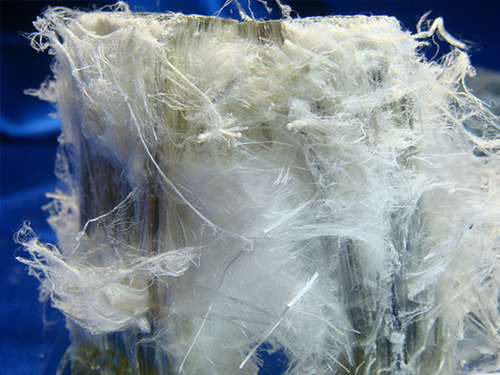

Asbestos Types
According to the US Environmental Protection Agency, there are six mineral types of asbestos—chrysotile, amosite, crocidolite, anthophyllite, tremolite and actinolite—which are divided into two classes: serpentine and amphibole.
The most commonly used types of asbestos in the UK were crocidolite, amosite and chrysotile. Each of the different asbestos types exhibit different characteristics and textures, posing a varying risk to health.
Crocidolite or ‘blue asbestos’: Crocidolite is widely considered the most dangerous form of asbestos, as its short and spikey fibres can easily puncture the lung tissue, maximising the potential for genetic and cellular damage leading to cancers. Before it was banned in 1985, it was most common in the marine industry.
Amosite or ‘brown asbestos’: Like crocidolite, amosite fibres also have a coarse texture and are a highly toxic form of asbestos. It was most commonly mixed with chrysotile and used for asbestos insulating boards (AIBs).
Chrysotile or ‘white asbestos’: Before it was finally banned in the UK in 1999, chrysotile was by far the most widely-used form of asbestos, accounting for more than 90% of all commercial applications. Unlike the rough texture of amosite or crocidolite, chrysotile is made up of softer fibres which can be exhaled more easily. However, exposure to chrysotile still represents a risk to health.
About Alpha Surveys
Alpha Surveys provides crucial asbestos services to industrial, commercial and residential customers across London and the South East. We are fully accredited by the British Occupational Health Society (BOHS) for all our services, which include asbestos management surveys, sampling and testing, refurbishment and demolition surveys and ongoing support.
We are a family-run business of asbestos specialists who operate with the support of a UKAS-accredited laboratory to identify and establish a course of action for dealing with any asbestos containing materials (ACMs) found on your property. For more information about any of our asbestos services, please browse our website or get in touch with our team.